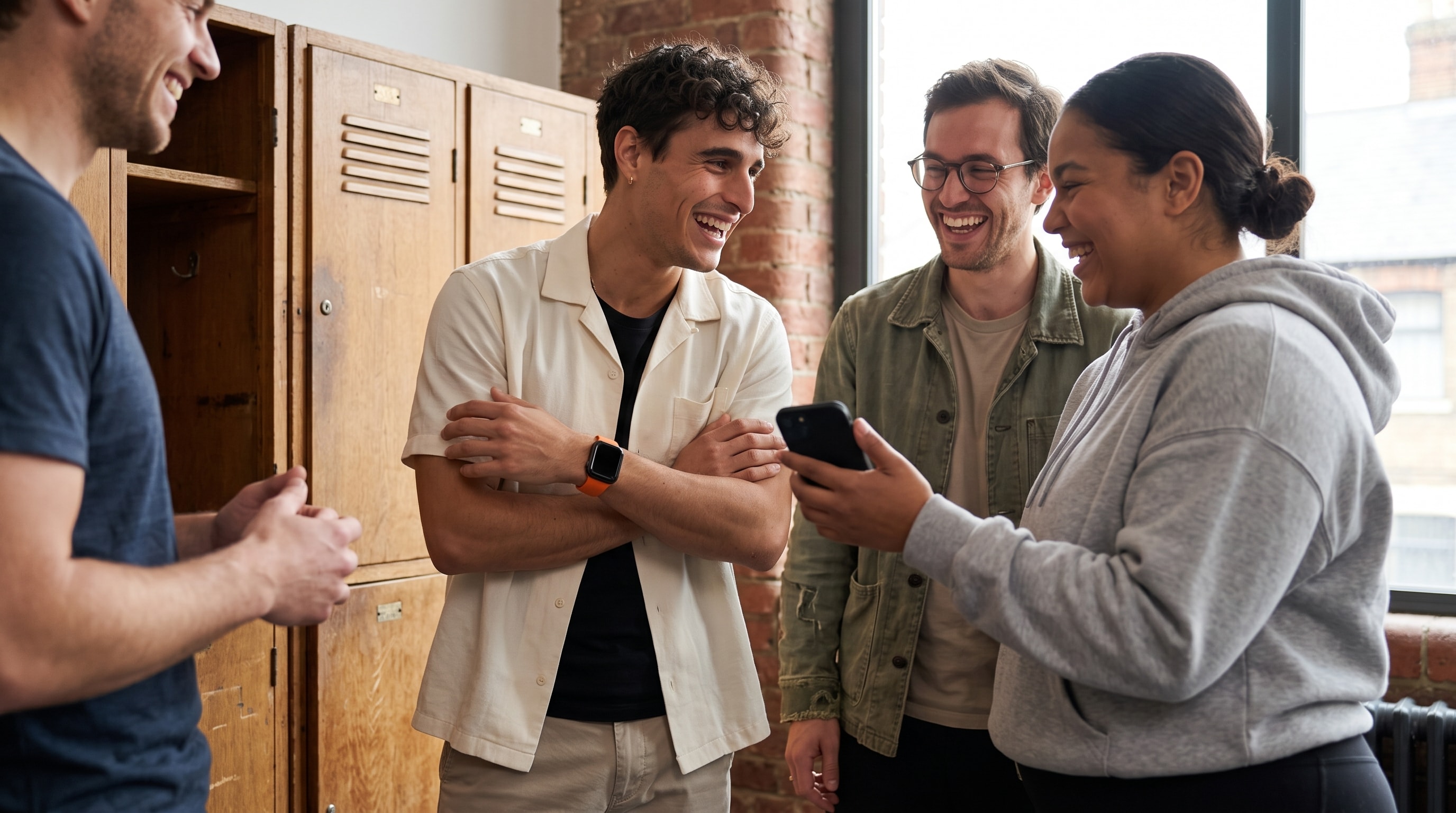
Setting up a workplace fitness challenge sounds easy until you hit the wall. One person has an Apple Watch. Another has a Fitbit. Someone else just uses their iPhone. Most apps are locked to one device, and the ones that aren't often feel fuzzy about how they score, which is where teams stall. HR wants something inclusive. Team leads want something simple. Participants want to know the leaderboard isn't rigged toward whoever bought the fanciest wearable.
MoveTogether reads activity from Apple Health, Google Health/Fitbit, Garmin, WHOOP, Strava, Polar, Oura, Ultrahuman, and iPhone-only tracking, then puts it on one live leaderboard. Fairness isn't only a technical problem, though. It's what decides whether people join at all, and whether they keep showing up after day three.
That participation piece is worth taking seriously. In one large workplace study, employees invited to a structured fitness challenge were more than 8 percentage points more likely to exercise regularly than people who weren't invited (about 70 percent versus 62 percent), with the biggest gains coming from previously inactive employees, per Wellhub's summary of the research. So this isn't a generic list. It's the set we'd run when the team has mixed devices, mixed fitness levels, and very little patience for setup.
1. The step count sprint
Monday morning the leaderboard goes live, and by lunch people already know the game. Walk more. Take the stairs. Take the long route to the meeting room. A step sprint works because the rule is obvious, which makes it one of the easiest ways to get a mixed group moving fast. Run it for five to seven days, because interest usually drops after that unless you add a second layer like team scoring or daily check-ins.
In MoveTogether, set the scoring method to Head to Head on steps and keep the win condition simple: highest total steps wins, by person or by team. The weak spot is fairness, since raw step totals look clean until you mix wrist devices and phone-only tracking, which don't capture movement identically. The fix isn't to complicate the challenge. It's to run one system that ingests the different feeds and applies the same rules to everyone, then set a tie-breaker in advance (active days or average daily steps) so nobody argues about edge cases later.
Step-only challenges are a great entry point, not the whole program. GoJoe, a workplace challenge platform, argues that broader multi-activity formats engage more of a population than traditional step-only contests. Treat a step sprint as the low-friction first round. Once people trust the scoring and get used to checking the board, add more balanced formats.
2. The ring close challenge
Monday starts with good intentions and by Thursday half the team has forgotten the challenge exists. Ring closes fix that, because they reward the daily reset rather than one huge effort that buries everyone else. This format fits when the objective is consistency: people get credit for hitting their own baseline across their daily Activity Rings, which feels fairer than a raw-volume contest in a team where one person trains seriously and another is just trying to break up long seated days.
Score it on Ring Close Count, which gives people a clear target each day and translates progress across Apple Watch, Fitbit, Garmin, and iPhone-only tracking instead of favoring whichever wearable records the biggest numbers. It's a strong fit for desk-heavy teams, support teams, and remote groups that want a daily habit instead of one weekly total. Keep the rule plain, because if people don't understand what counts they will assume the system favors Apple Watch users.
3. The workout challenge
This format is better when your team already has active people doing very different things. Runners hate being told only steps count. Lifters hate being invisible. The yoga person will stop joining if the board acts like their sessions don't exist. So reward the behavior you actually want, which is people carving out time to train, whether that's a home yoga class, a swim, a lunch run, or a bike ride.
MoveTogether's visible scoring methods don't isolate workouts on their own, so pick the one that matches your intent. Ring Close Count rewards the Exercise ring you close through training and keeps daily consistency in view. If you'd rather reward total output across varied activities, Raw Numbers sums movement volume directly. Either way, set one minimum session so nobody logs a two-minute stretch and calls it a win, then celebrate variety when someone strings together Pilates, cycling, and a hike in the same week.
4. The move goal percentage race
This is one of the fairest formats you can run. Raw totals reward capacity. Percentage of goal rewards effort relative to the goal already set for that person. A desk-based employee who pushes well past their Move goal can compete with the triathlete who's also pushing past theirs, and that changes the mood of the whole challenge.
The scoring method here is Percentage of Goals. It works well for companies with shift workers, broad age ranges, and very mixed training backgrounds, because it removes a lot of the quiet resentment that shows up in raw-number contests. One thing matters: goal calibration. If somebody's goal is set unrealistically low they can coast to the top, and if it's too high they never have a chance. Review goals before launch and fix obvious outliers.
5. The team relay or department showdown
Sometimes individual leaderboards backfire. The same few people float to the top, everybody else watches, and the challenge turns into a spectator sport. Department showdowns fix that. Pool the activity by team, marketing versus engineering or store A versus store B, and let people carry each other a bit. Teams create the useful kind of peer pressure, where someone takes a short walk at lunch because they don't want to leave their group hanging.
Run it as a team-based MoveTogether competition with rosters locked before the event starts, and pick whichever scoring method suits the group. A few rules matter more than the theme: lock teams in advance so last-minute balancing doesn't feel political, split departments so one team isn't all field staff and another all desk staff, and call out teams where lots of people contributed rather than only the top individual. Choose this format when connection matters more than crowning one winner.
6. The streak challenge
Monday is easy. By Thursday someone had a late flight, someone else forgot to charge a watch, and one missed day suddenly feels bigger than the whole challenge. That's why streaks work: they make consistency visible fast, and they give busy employees a fair way to stay competitive without athlete-level volume. Use one daily target, like closing a ring or hitting a movement threshold that works across wearables, and score it on normalized daily activity so Apple Watch, Fitbit, Garmin, and phone-only users can all keep the chain alive under the same logic.
Missed days are the tension in this format. Too much forgiveness and the streak means nothing. Too little and people drop after one bad day. Set the rescue rule before launch and don't invent exceptions mid-challenge. This is where Streaks & Shields earns its place: a Shield you've earned deploys automatically to protect against a limited number of misses caused by travel, illness, or family life. The cap is the point. People still care about the streak, but one rough day doesn't erase three good weeks.
7. Personal best versus Past You Ghost racing
Monday starts and the company leaderboard already feels out of reach for half the room. One person trained all weekend. Another spent Sunday on a flight. A third is easing back after a knee flare-up. A ghost race fixes that, because the target is personal and still competitive. Each person tries to beat their own previous strong week instead of chasing the fittest colleague, and participation usually improves because the challenge feels fair from the start.
Past You Ghost pulls your best completed week and puts it on your current leaderboard as a live competitor, scored on the same normalized activity model you use everywhere else so “past you” and “current you” are judged by one consistent system across any device mix. It's part of MoveTogether Pro. Set the baseline rule up front, such as your best completed week from the last two or three months, and reward biggest improvement against baseline rather than a single winner-takes-all board. It pairs well with promotion-style workplace leagues for people who aren't ready for direct competition yet.
8. Monthly Move Leagues with tier promotion
If your company wants more than a one-off event, use leagues. One challenge ends, but a league keeps going because the structure resets every week. You aren't trying to dominate the same giant leaderboard forever. You're trying to move up, avoid relegation, and compete with people closer to your level.
Move Leagues run as weekly cohorts of up to 30 people with promotion and demotion, and they're included on every account. That matters in a workplace because matched competition feels more alive than a giant board where the top spots are settled on day two. Someone in a lower tier still has promotion to play for, someone in a higher tier has to defend their place, and the middle doesn't disappear. Seed new participants toward the middle so nobody gets discouraged instantly, and lean on short weekly recaps instead of constant notifications.
9. The weekly recap and reflection format
Some teams want more than a winner. They want feedback. A weekly review format works for data-minded groups, managers who want a light wellness touchpoint, and participants who lose motivation when all they see is rank. It turns the challenge from “who won” into “what happened this week.”
The Weekly Mo Report, part of MoveTogether Pro, is useful as that ritual. Every week Coach Mo drops a shareable multi-slide recap: a grade for the week, your best and worst day, ring breakdowns, trend deltas, and a head-to-head on your competition. For workplace use, keep it light. Nobody wants a manager dissecting their sleep graph in a one-on-one, but team-level reflection works when the culture is supportive and participation is clearly voluntary. Focus recaps on encouragement and consistency, not surveillance.
There's good reason to care about the social wrapper, not just the activity total. One published workplace study found that a four-month, team-based pedometer program reduced psychological distress, with effects still present eight months after it ended, per the Global Corporate Challenge study in PMC. The team structure is doing part of the work.
10. The cross-wearable equality challenge
This is the challenge almost nobody names directly, and it causes half the headaches. People don't just ask for challenge ideas. They ask whether Apple Watch users will beat Fitbit users by default, whether Garmin data will look inflated, and whether iPhone-only employees are being set up to lose. Those are fair questions, and answering them up front removes the biggest adoption barrier.
Run one challenge where the message is explicit: bring whatever you've got, everyone is in the same competition, and the scoring is transparent. The point isn't to pretend every device is identical. Wearable metrics vary by device and by the algorithms behind them, so the goal is scoring rules that don't punish people for the hardware they already own. Percentage of Goals is the fairest fit here, because it compares each person to their own targets rather than to whichever tracker records the biggest numbers. If you want a plain-English walkthrough to share with participants, our fitness tracker comparison guide answers the fairness question before it becomes a Slack thread.
The ten formats at a glance
| Challenge | Scoring or feature | Best for |
|---|---|---|
| Step count sprint | Head to Head on steps | Fast setup, mixed groups, low-friction walking |
| Ring close challenge | Ring Close Count | Desk-heavy teams who want daily consistency |
| Workout challenge | Ring Close Count | Active teams doing varied training |
| Move goal percentage race | Percentage of Goals | Mixed ability, shift workers, broad age ranges |
| Team relay / department showdown | Any method, team-based | Culture first, cross-functional engagement |
| Streak challenge | Ring Close Count | Onboarding and habit-rebuilding months |
| Past You Ghost racing | Past You Ghost | People who never reach first place (Pro) |
| Monthly Move Leagues | Move Leagues | Ongoing, level-matched weekly competition |
| Weekly recap format | Weekly Mo Report | Data-minded teams and light coaching (Pro) |
| Cross-wearable equality | Percentage of Goals | Mixed-device rollouts, onboarding, inclusivity |
Making your first challenge happen
Monday morning you post the challenge in Slack. By lunch someone asks whether Apple Watch rings count differently than Fitbit steps, someone else can't get their device connected, and the least active people have already decided the leaderboard isn't for them. That's how workplace fitness challenges lose trust before they start. The fix is not more hype. It's clearer design: fair scoring, simple setup, and rules people can understand in one read.
Start smaller than you think. A one-week pilot with one department is usually enough to expose the real issues, and you'll learn whether your team responds better to simple steps, percentage-based goals, or team formats that reduce individual pressure. For a first test, use this order:
- Start with a step count sprint if you want the fastest setup and the least explanation.
- Use a ring close challenge if your group has mixed fitness levels and you want daily wins to feel reachable.
- Choose the move goal percentage race if fairness is the top priority and you want scoring tied to each person's own target.
- Run a team showdown if culture matters more than individual ranking.
- Save leagues and deeper coaching for round two, once the team trusts the scoring and wants more structure.
MoveTogether is available on iOS and Android. It also doesn't do GPS route mapping. The focus is fair competitions, clear scoring, and coaching that keeps mixed-device groups involved.
A few pages help during setup: the comparison pages sort out what fits mixed-device groups, the wearables page lists current device support, pricing keeps it to one optional Pro tier, and the glossary explains the scoring terms. The hard part isn't choosing an idea. It's removing enough friction that people say yes.
If you want a simple place to start, MoveTogether is built for exactly this. You can launch a competition on any plan, invite people with mixed devices, and see quickly whether your team responds better to steps, rings, workouts, or leagues. It puts Apple Health, Google Health/Fitbit, Garmin, WHOOP, Strava, Polar, Oura, Ultrahuman, and iPhone-only activity on one live leaderboard, with Move Leagues and Coach Mo to keep the habit going. Download MoveTogether and start competing, with an optional Pro tier. MoveTogether is available on iOS and Android.
Third-party device and platform names belong to their respective owners. MoveTogether is available on iOS and Android.