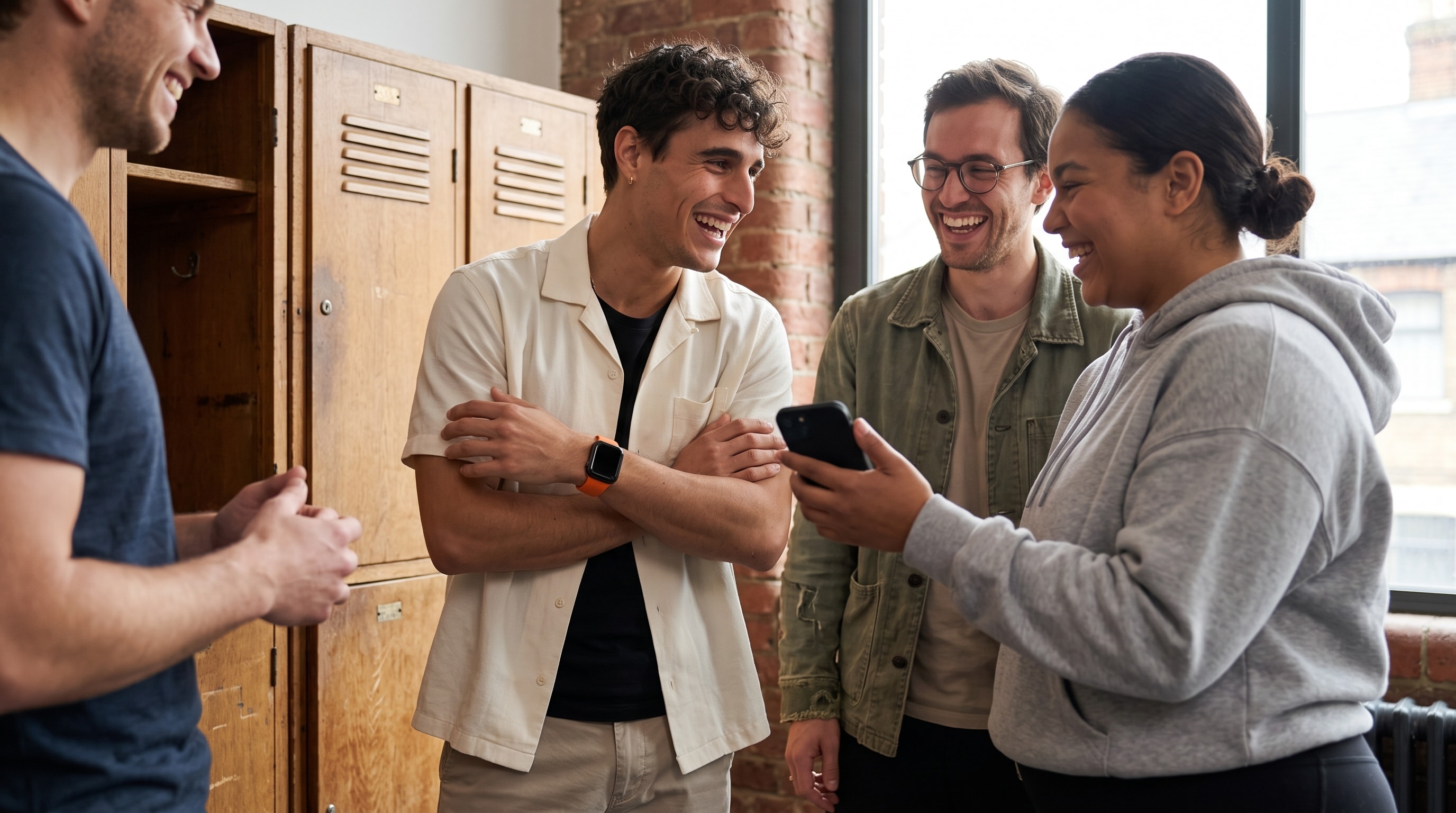
Fitness challenges should bring people together, not sort them by the logo on their wrist. When a challenge only works for one device type, Android users and people with other wearables can feel left out before anyone takes a first walk, run, or workout.
At MoveTogether, we believe friendly competition works best when everyone can take part with the device they already use. A cross-platform fitness app helps groups focus on shared movement, accountability, and fun instead of worrying about compatibility.
Keep Every Teammate Moving From Day One
Mixed devices are part of normal life now. One friend group might have Apple Watch users, Fitbit owners, Garmin runners, WHOOP members, Oura Ring wearers, and people who track activity with an Android phone. When a challenge supports only one ecosystem, organizers are forced to decide who gets included and who has to sit out.
That choice has a bigger effect than many people expect. A coworker who cannot join may feel overlooked. A family member may skip the group chat. Friends may stop inviting others because they are unsure whether their devices will work. The challenge starts with a small wall between people, even though the whole point was to create connection.
Device limits also hurt participation early. Most people do not want to download extra tracking apps, type in workouts by hand, or buy new hardware just to join a short-term competition. If signing up feels like work, excitement can fade before the leaderboard even opens.
For organizers, inclusion helps create the energy that makes a challenge stick:
More people can join using familiar devices
Teams feel complete instead of divided
Group chats have more encouragement and friendly talk
A larger leaderboard gives everyone more reason to keep moving
Whether you are planning a workplace wellness challenge, a gym event, a team competition, or a family activity streak, broad access helps build momentum from the start.
Exclusion Shrinks Sign-Ups Before the Challenge Begins
The hidden cost of excluding Android users often shows up quietly. You may notice fewer registrations, less conversation in the group chat, or a slower launch than expected. It is easy to blame busy schedules or low motivation, but the real problem may be that people are not sure their device is welcome.
Joining should be simple. Participants should only need to answer one question: "Do I want to be part of this?" When they first have to check whether their Android phone, Fitbit, Garmin, or wearable is supported, they face an extra decision point. That extra step can make the challenge feel less open.
In team-based competitions, leaving out one person can affect everyone around them. Teams may hesitate to form if a friend cannot join. Coworkers may avoid inviting a new teammate. Families may choose not to participate if one person is excluded. Soon, the challenge loses the natural word-of-mouth growth that makes friendly competition enjoyable.
With a cross-platform fitness app, we can bring activity data from major devices into one shared competition. Instead of sending out separate instructions for different platforms, organizers can keep registration clearer and reduce common support questions. Just as importantly, everyone receives the same invitation.
Fair Rules Matter More Than Matching Devices
Some organizers limit a challenge to one device brand because they think it is the only way to keep competition fair. We understand that concern. Apple Watch, Fitbit, Garmin, WHOOP, Oura, and Android-based fitness platforms can measure activity in different ways. Some focus on steps, while others may emphasize workout time, active calories, heart rate, recovery, or strain.
Raw data is not always a perfect one-to-one comparison. Still, requiring everyone to own the same device is not the only path to fair play. It may create consistency, but it also creates a smaller competition that leaves out people who are ready to participate.
A thoughtful scoring system can normalize activity data and keep the focus where it belongs: on showing up and moving. The goal is not to pretend every wearable measures every workout in the exact same way. The goal is to give each participant a credible opportunity to compete without a device advantage taking over the leaderboard.
Clear rules make that possible. Before a challenge begins, participants should understand:
What types of activity count toward the competition
How their wearable or phone data is tracked
How scores appear on the leaderboard
What happens if an activity needs review
Which behaviors do not fit the spirit of the challenge
When everyone understands the rules, there is less confusion and fewer arguments. People can spend more time cheering each other on and less time questioning the score.
One Shared Leaderboard Keeps Teams Connected
A fitness challenge becomes more motivating when people can see the full picture. If Apple Watch users are checking one app while Android users are recording activity somewhere else, the group is not really competing together. It is a set of disconnected experiences with no shared sense of progress.
Live leaderboards bring small choices to life. A lunchtime walk can move someone up a spot. An evening strength workout can help a team close a gap. A weekend hike can create a fun surprise at the top of the board. When participants can see those changes in one place, activity feels social instead of private.
That shared view also gives people more chances to celebrate. We see the best challenge energy when a group can notice effort as it happens, encourage someone who is close to a milestone, and enjoy a little friendly rivalry without taking it too seriously.
MoveTogether brings participants together across Apple Watch, Fitbit, Garmin, WHOOP, Oura, Android, and more. By unifying activity data into live, fair leaderboards, we help groups compete around shared goals while allowing each person to keep using the device they prefer.
Make Fall Challenges Open to Everyone
Fall is a great time to bring a group together around movement. As days get shorter, school routines fill up, travel plans begin, and holiday events get closer, it can be harder to stay consistent. A seasonal challenge gives people a simple reason to keep a walk, workout, or active break on the calendar.
We recommend planning fall step competitions, activity streaks, team walking challenges, or pre-holiday wellness programs with device flexibility from the beginning. Busy seasons are rarely predictable. Someone may use a smartwatch most days, track with an Android phone while traveling, or rely on a different wearable as their schedule changes.
Building for broad participation helps your challenge stay welcoming when routines shift. It also helps teams create habits and connection that can carry forward when the new year arrives.
Before launching your next challenge, look closely at who can join, what devices are supported, and whether the scoring rules feel fair. A strong fitness challenge is not defined by one brand of wearable. It is defined by shared effort, friendly accountability, and a leaderboard where every participant has a place.
Bring Every Teammate Into the Challenge
MoveTogether helps organizations create inclusive challenges with a cross-platform fitness app built for both Android and iPhone users. Our tools make it easier to organize participation, track progress, and keep motivation high across your whole group. Ready to build a challenge that works for everyone? Contact us to get started.
Frequently Asked Questions
Why do fitness challenges need to support Android users?
Supporting Android users helps more people join with the phone or wearable they already own. When participants are excluded because of device type, sign-ups, team participation, and group motivation can decline.
What is a cross-platform fitness challenge app?
A cross-platform fitness challenge app lets people join the same activity competition using different devices and operating systems. It can bring data from sources such as Apple Watch, Fitbit, Garmin, Android phones, WHOOP, and Oura into one shared challenge.
How can I run a fitness challenge for people with different wearables?
Choose a challenge platform that supports the devices your participants already use, then set clear registration and scoring rules. Use a shared leaderboard and simple challenge goals so everyone can focus on participation rather than device compatibility.
Is a fitness challenge fair if participants use Apple Watch, Fitbit, Garmin, and Android phones?
It can be fair when the challenge uses thoughtful scoring rules that account for differences in how devices measure activity. Requiring every participant to buy the same device may create consistency, but it also excludes people who are ready to participate.
What is the difference between a single-device fitness challenge and a cross-platform challenge?
A single-device challenge only allows participants with one specific brand or ecosystem to join. A cross-platform challenge welcomes participants using different phones and wearables, which can increase sign-ups, strengthen teams, and create a more inclusive competition.