You walk into the gym, hit a few presses, and your shoulders still don't look or feel balanced. The front delts get plenty of work. The side delts usually get some love too. The rear delts? They're the part many lifters skip until posture, pressing, or pulling starts feeling a little off.
That is why a good rear delt exercise matters. The rear deltoids are a small muscle group, so they tend to respond better to higher-rep, moderate-load work done a couple of times a week than to heavy, sloppy loading. They also need some direct attention. Rows help, but a back full of pulling volume does not always train the rear delts the way a dedicated move does.
The short version is simple. Use movements that keep tension on the back of the shoulder, keep the load honest, and keep your form strict. If your traps take over, your lats dominate, or you start swinging the weight, you are not really training the rear delts. We'll keep this practical and stick to what works.
1. Reverse pec deck flye
The reverse pec deck is one of the cleanest ways to train the rear delts, because the machine takes balance out of the equation. You sit against the pad, keep your torso supported, and move your arms through a controlled arc. That setup makes it easier to stay honest. You can focus on the back of the shoulder instead of fighting to stay steady, which is useful when you want repeatable tension without extra strain on the lower back.
Why it works
A rear delt exercise like this is a strong choice when you want a fixed isolation pattern. The rear delts respond well to controlled horizontal abduction, and the pec deck keeps the path consistent from one rep to the next. That consistency also makes compensation easy to spot. If you start shrugging or jerking the handles, the set stops feeling like rear delt work.
One rule keeps it honest: if you cannot keep your chest planted and your elbows softly bent, the weight is too heavy.
Start with the seat height. The handles should line up so your arms travel in a strong, comfortable arc instead of a forced one. Sit tall, lead with the elbows, and pause briefly when the shoulder blades are spread. That small pause matters more than adding plates too early.
This machine also works well when you want a simple progression target. Start light, own the range, then add load only when the movement stays clean. It fits on a shoulder day, after pressing, or near the end of a back session. Track improvement by comparing total reps over time rather than guessing when to add weight, which is the same idea behind measuring fitness progress in general.
2. Face pulls
Face pulls earn their reputation by hitting the rear delts while also working the upper back and external rotators. That makes them useful when you want more than a simple rear-shoulder burn. They fit well into shoulder work, especially if you care about posture, pulling balance, and joint-friendly volume.
Set the cable up correctly
Place the rope attachment at eye level or slightly higher. Pull toward your face, then split the rope so the ends move past your ears. Keep your elbows high and wide through the pull. If your elbows drop, the movement starts looking more like a row than a clean rear delt exercise.
That setup gives you a safer way to build volume when your shoulders are already tired from pressing or rowing. It also works as a warm-up before overhead work or as a finisher after back training. The trade-off is simple. Face pulls get sloppy fast when the load is too heavy, and the rear delts stop doing the work once your torso leans back to finish the rep.
Keep the reps controlled and repeatable. Two or three sets of 15 to 20 reps fits the higher-rep style that suits rear-delt work. If the goal is shoulder balance, stay smooth and keep the same path on every rep. If the stack is turning into a body swing, the weight is too heavy. If your shoulders feel beat up after pressing, knowing whether ice actually helps sore muscles can help you decide what to do next.
3. Bent-over dumbbell raises
Bent-over dumbbell raises are the classic no-frills rear delt move. You hinge at the hips, let the dumbbells hang, and raise them out to the sides with strict control. There is nowhere to hide. If you swing, shrug, or bend the torso to cheat the rep, the load shifts fast.
Form details matter more than almost anything else. Keep the elbows slightly bent, move through horizontal abduction, and bring the arms up until the elbows sit roughly at shoulder height, then lower under control so the lats do not take over. That is the difference between a true rear-delt set and a sloppy upper-back swing.
Make the hinge boring
Set your hips back until your torso is close to parallel with the floor. Keep the spine neutral. Let the weights hang dead still before the first rep. Then lift with the elbows, not the hands. The dumbbell only works if your shoulder does the lifting, and if your lower back is helping a lot, the set has already drifted.
This movement is especially useful when you need something simple at home, or when the machines are taken. It also pairs well with rows, because the row is the heavier compound while the flye gives you the direct rear-delt hit. Keep the rep range moderate, the load light, and the control tight. If the last few reps get ugly, stop there. Rear delts usually respond better to clean tension than to ego loading. If they feel cranky the next day, treat recovery as part of the plan rather than an afterthought.
4. Cable reverse flyes
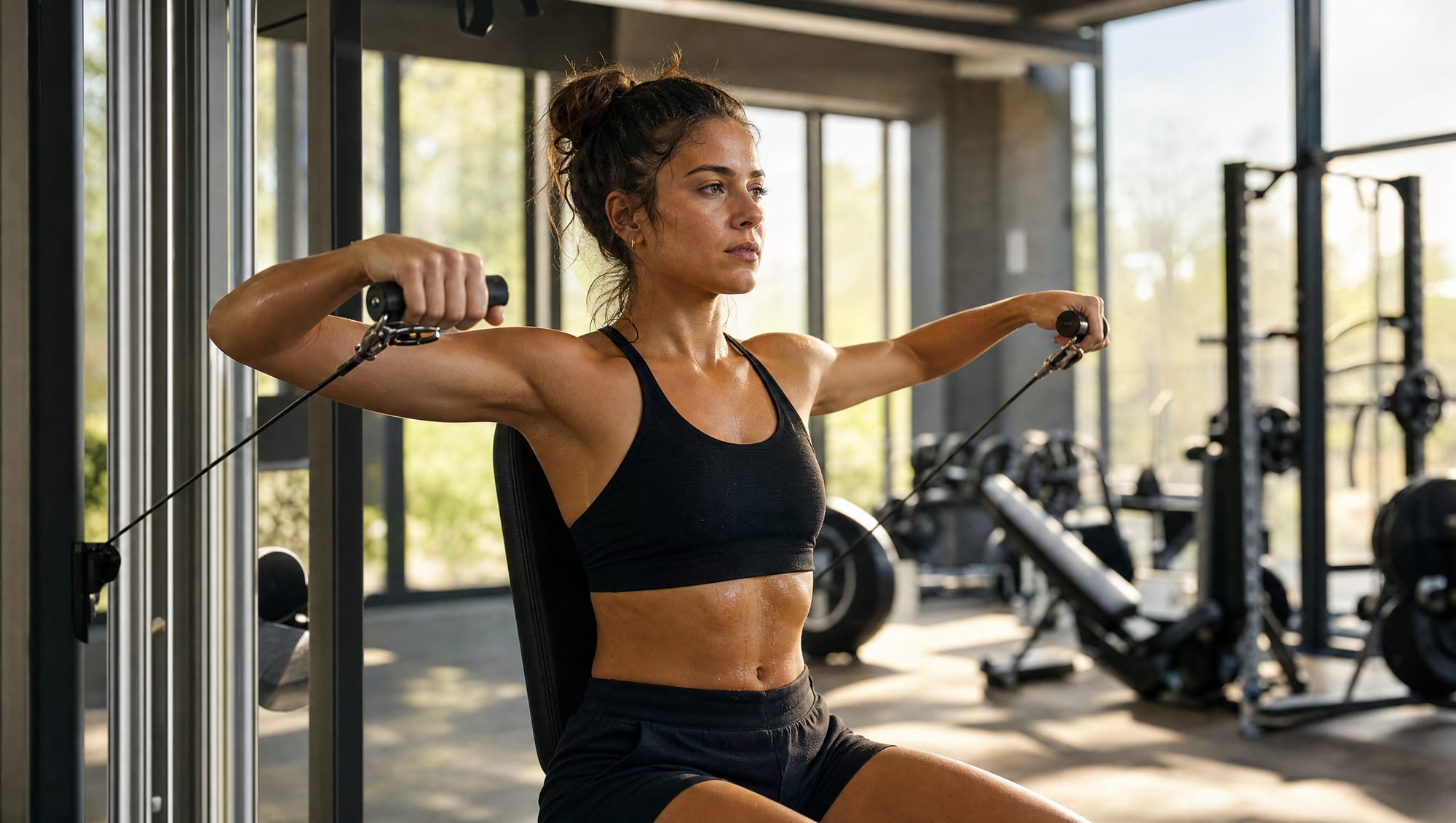
Cable reverse flyes sit in a nice middle ground. They are still an isolation exercise, but the cables keep tension on the rear delts through more of the arc than a dumbbell often can. That makes them a strong option when you want smooth resistance and a more adjustable setup.
They are also useful when you are cleaning up asymmetries. One arm can drift less, one side can be set up a little differently, and you can dial in your body angle without changing the whole exercise. That flexibility is part of why cable work shows up so often in higher-volume shoulder sessions.
Keep the torso quiet
Stand between two cable stations with a neutral grip and a soft elbow bend. Pull outward and slightly back in a wide arc. Do not turn the movement into a standing chest fly, and do not lean so far forward that your traps take over.
A moderate stance usually works best, and a little upright posture keeps the shoulder path honest. A half-kneeling setup can feel more stable through the torso, which some lifters like, because it cuts down on cheating and forces the shoulder to do the work.
This is a strong secondary movement after compound pulling. It also fits when you want to keep the session smooth and joint-friendly instead of loading another heavy free-weight pattern. Use it for clean reps, not max effort. The rear delts do not need drama. They need tension, repeatability, and enough weekly work to grow.
5. Resistance band pull-aparts
Band pull-aparts are the easiest rear delt drill on this list, and that makes them useful in a different way. You can do them almost anywhere, they cost little to recover from, and they work well when you want a simple shoulder pattern you can repeat without much setup. They earn their place when you have a clear reason for them, whether that is light accessory volume, movement prep, or an easier day. If you are building a training plan, tying them to your broader routine through sensible fitness goals keeps them from turning into random busywork.
Don't turn it into a trap shrug
Hold the band at chest height with straight arms and pull it apart until your hands move wide enough to approach a T shape. Keep the ribs down and the neck long. If the shoulders start climbing, the rear delts are losing the job.
A small pause at the widest point helps. So does controlling the return instead of letting the band yank your arms forward. That slower tempo gives you more useful reps, especially when you want clean rear delt work without loading the joints or the lower back. A quick gauge: if the band snaps you back fast, it is too light to be useful, and if you cannot hit clean reps, it is too heavy.
Use this movement to support the rest of your program, not replace it. It works well as a low-friction add-on when you want direct rear delt volume without much fatigue, and it is easy to keep in rotation when you need something simple at home or on the road. The main job is precision. Keep the motion honest, keep the range controlled, and pick a band that lets you finish the set without turning it into a shrug.
6. Machine-based rear delt fly
Some gyms have a dedicated rear delt fly machine, separate from the reverse pec deck. These usually use lever arms or a selectorized stack, and they can feel a little different, because the handle path and starting angle are not always identical. That difference matters more than people think. Small changes in setup can shift the feel from rear delt to upper back very quickly.
This is a good option when you want machine stability but a slightly different line of pull. It also helps in high-volume sessions, because the machine guides the path and takes balance off your plate, which keeps the focus on the contraction instead of survival.
Setup decides the result
Adjust the seat so the handles line up with your rear delts. Grip with a neutral hand position or a slight external rotation. Pull outward in a smooth arc and pause at the stretched position before controlling the return.
If the machine feels strange, do not assume it is wrong. Different gyms use different designs. The question is whether you can keep tension on the back of the shoulder without shrugging or turning the rep into a row. If you cannot, change the seat or the load before you change the exercise.
This is often a strong secondary movement after rows or pulldowns. It belongs in shoulder-specific sessions, especially when the goal is direct rear-delt volume without beating up your lower back. The rear delts do not care whether the resistance comes from a stack or a lever arm. They care whether the path is controlled and the set stays strict.
7. Prone incline dumbbell raises
Prone incline dumbbell raises are a strong option when lower-back stress is a concern. You lie face-down on an incline bench, let the dumbbells hang, and raise them in a wide arc. The bench removes a lot of body English, so the rear delts stay under the load instead of the torso taking over.
This variation also makes it easier to keep the set honest with lighter loads. You cannot swing much, and you cannot turn the rep into a standing heave. That matters, because rear delts usually respond better to controlled work and repeatable tension than to chasing heavy weight.
Use the bench to clean up your reps
Set the incline steep enough that your chest is supported and your arms can hang cleanly. Lift out to the sides until the arms approach parallel with the floor, then lower under control.
This is a good choice for lifters who feel bent-over raises in their lower back. It also works as a finisher, because the setup naturally limits cheating. The trade-off is that some lifters load it too heavily and lose the rear-delt feel. Keep the weight honest. The exercise works better when the contraction is obvious and the lowering phase stays slow.
The seven moves at a glance
| Exercise | Setup complexity | Equipment | Best for |
|---|---|---|---|
| Reverse pec deck flye | Low | Pec deck / reverse fly machine | Stable isolation, finishers, easy load steps |
| Face pulls | Low to moderate | Cable and rope | Shoulder health, warm-ups, high-rep finishers |
| Bent-over dumbbell raises | Moderate | Dumbbells | Home or gym, pairs well with rows |
| Cable reverse flyes | Moderate | Dual cable stations | Constant tension, fixing left-right imbalances |
| Resistance band pull-aparts | Very low | A resistance band | Warm-ups, travel, daily prehab volume |
| Machine rear delt fly | Low | Dedicated rear delt machine | High-volume isolation, easy on the lower back |
| Prone incline dumbbell raises | Low to moderate | Incline bench and dumbbells | Strict isolation when the lower back is cranky |
Putting it all together
You do not need all seven. You need a small, consistent plan that fits your equipment, your recovery, and how your shoulders move. A sensible setup usually pairs one heavier or more stable exercise with one lighter isolation move. That could be a reverse pec deck plus face pulls, or bent-over raises plus band pull-aparts.
For most lifters, the rear delts do well trained a couple of times a week with a gradual climb in volume. Start conservative and add sets as recovery allows. If you are new to direct rear-delt work, keep the weekly set count low enough to recover from. If you already row a lot, remember that rows help but do not always replace direct isolation, especially when the arm path drifts toward the lats or mid-back instead of a pure rear-delt bias.
A practical split looks like this. Pick one machine or cable option for controlled tension, then add one free-weight or band movement for extra volume. Keep the reps in the moderate-to-high range, and do not chase max load just because the exercise feels small. The rear delts are small, but they are not irrelevant. They balance the shoulder, support pulling mechanics, and improve how the whole upper body looks and moves.
The biggest mistake is treating rear delts like an afterthought. The second is turning every rep into a trap shrug or a row. Keep the elbows out, keep the range clean, and keep the weekly work steady. Do that and your shoulders usually start looking and moving better without much drama.
None of this needs fancy tracking, but a bit of accountability helps the volume actually add up. MoveTogether reads your activity from the trackers you already use, from Apple Watch and Fitbit to Garmin, and turns steady effort into a friendly competition with people you know. Download MoveTogether and start competing, with an optional Pro tier. MoveTogether is available on iOS and Android.
Third-party device and platform names belong to their respective owners. MoveTogether is available on iOS and Android.